
 By Henry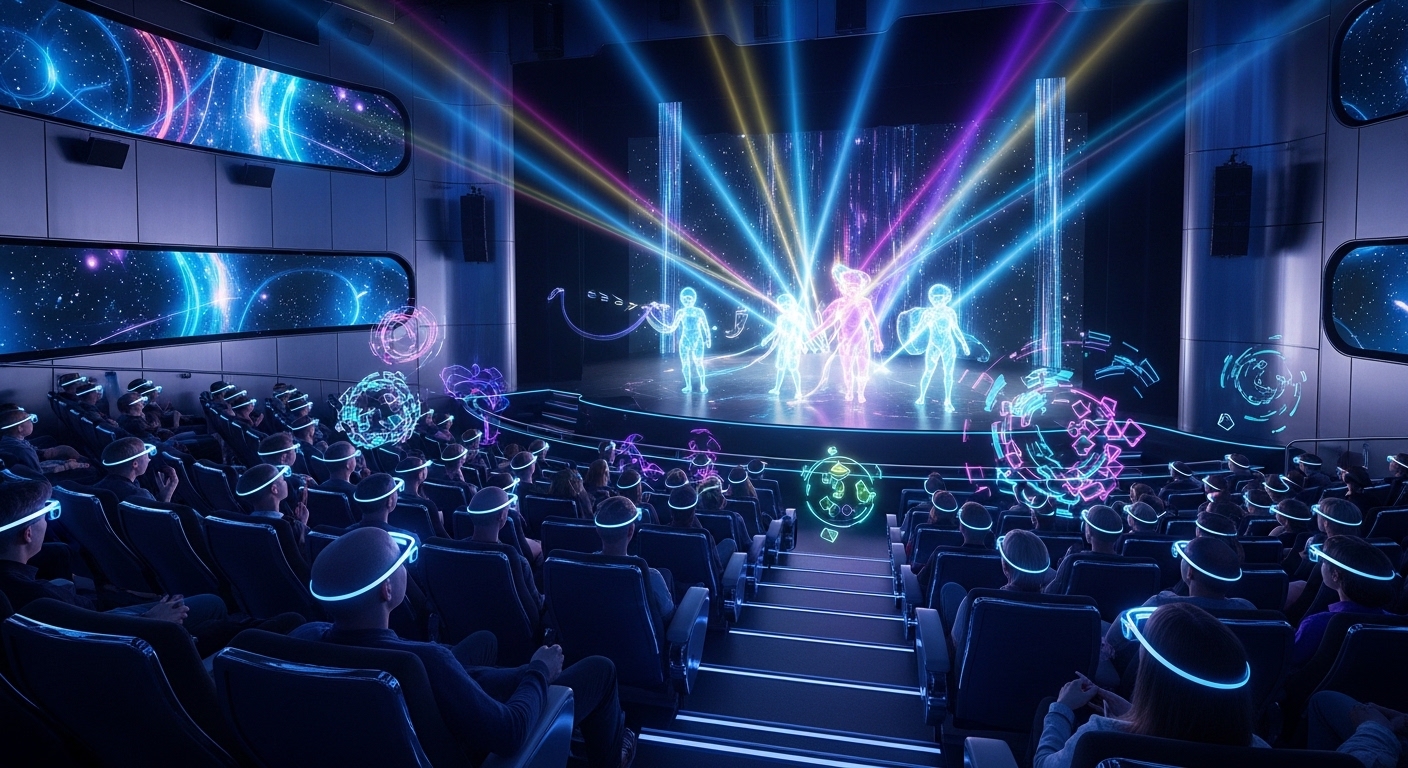
Imagine walking into a theater and suddenly the walls breathe with you. The villain from the story leans in, whispers your name, and asks what you’d do next. Your seat vibrates with the bass line, a faint scent of rain fills the air, and your phone lights up with a choice that actually changes the ending. That’s not a sci-fi movie. That’s Spaietacle, and it’s already here.
Spaietacle is immersive entertainment taken to the next level. It fuses live performance, augmented reality (AR), virtual reality (VR), holographic displays, and multi-sensory technology into one seamless experience. Think of it as interactive theater meets digital storytelling, where the audience doesn’t just watch, they co-create.
At its core, Spaietacle turns every sense into a storytelling tool. Instead of sitting still in the dark, you move, touch, smell, and decide. A single event can mix:
- AR overlays that bring historical figures into the room with you
- VR headsets for remote friends who feel like they’re sitting right beside you
- Haptic suits that let you “feel” a dragon’s breath
- Scent diffusers timed to the plot
- Audience-voting systems that rewrite scenes in real time
The result? Zero passive scrolling. One hundred percent presence.
We’re no longer talking about clunky headsets or glitchy apps. In 2026 the hardware has shrunk, the software has learned your preferences, and 5G (and now 6G trials) make lag a thing of the past. Museums are rolling out Spaietacle tours where you walk through ancient Rome while your guide is a holographic Julius Caesar who answers your questions. Brands are hosting hybrid events where VIPs in Tokyo and fans in Texas share the same virtual stage. Immersive spaietacle theater experiences now sell out faster than traditional Broadway shows because people crave the thrill of being inside the story.
Take the 2025 Nike “Future Court” campaign. Fans scanned a QR code at pop-up stores and stepped into a full-court AR basketball game against a digital LeBron. Engagement jumped 340 percent compared with standard ads. Or look at the Van Gogh Spaietacle exhibit that toured Europe last year: visitors wore lightweight AR glasses and literally walked inside the paintings. Ticket revenue tripled what the museum earned from its regular shows.
For brands: deeper emotional connection, shareable moments, measurable data on every interaction. For organizers: higher ticket prices, lower physical venue costs, global reach through virtual attendance options. For audiences: memories that last longer than any Netflix binge, because you helped shape them.
You don’t need a Hollywood budget. Here’s a practical roadmap:
- Pick your story and your “wow” moment (one sensory surprise that people will talk about for weeks).
- Choose your tech stack: free AR tools like 8th Wall for web-based experiences, affordable VR headsets like Meta Quest 3, or even just a custom mobile app.
- Map the audience journey: what do they see, hear, touch, and choose at each step?
- Test with 20–50 people first. Fix the glitches before you scale.
- Promote the interactivity: “Be the hero” beats “Come watch a show” every time.
- Offer virtual attendance options so anyone on the planet can join.
Museums love Spaietacle because it solves the “quiet, don’t touch” problem. The British Museum’s new “Tutankhamun: Alive” experience lets visitors hold a holographic scarab and hear the pharaoh’s voice in their ear. Theaters are using it to revive classics: imagine Hamlet where the audience votes whether he takes the “to be or not to be” path, and the actors adapt on the fly.
- Download a free AR theater app (search “immersive theater AR”) and try a 10-minute experience tonight.
- Book tickets to a hybrid concert or museum tour that advertises “audience participation.”
- If you run events, add one interactive element (even a simple poll that changes the lighting) and watch the energy shift.
The next leap is full-body haptic suits that cost under $300 and brain-computer interfaces that let you think your choices instead of tapping a screen. 2026 is the year Spaietacle stops being “the future” and becomes the default way we gather, celebrate, and tell stories.
Ready to step inside the story instead of just watching it? Drop a comment: what’s the first Spaietacle experience you want to try?
What is Spaietacle entertainment exactly?
Spaietacle is immersive entertainment that uses AR, VR, holograms, and sensory effects so the audience actively shapes the story instead of just watching.
How much does it cost to create a Spaietacle event?
You can start for a few hundred dollars using smartphone AR tools. Full-scale productions with haptics and holograms run from $10,000 to over $100,000 depending on scale.
Can I attend a Spaietacle event virtually?
Yes! Most modern Spaietacle experiences offer virtual attendance options so you can join from anywhere with a good internet connection.
Is Spaietacle only for big brands and museums?
Not at all. Indie theater groups, wedding planners, and even birthday parties are already running mini Spaietacle experiences.
Will I get motion sick from the VR parts?
Newer headsets and hybrid designs (mixing real-world movement with light VR) have dramatically reduced motion sickness. Most people feel fine within minutes.
How is Spaietacle different from regular VR gaming?
Spaietacle always includes live performers or real-time human interaction. It’s not just you against a computer, it’s you with other people in a shared story.