
 By Henry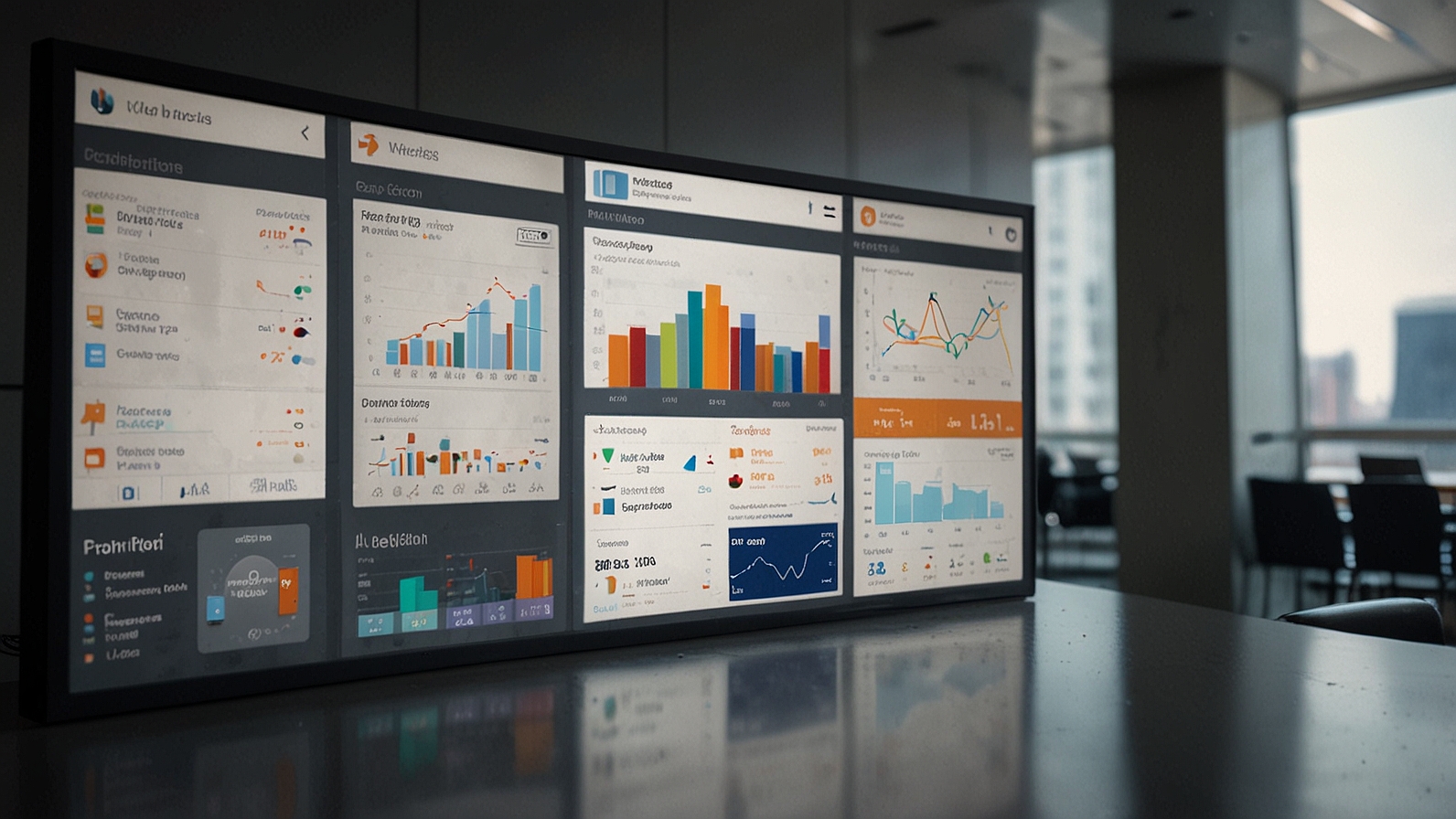
Imagine your entire operation’s performance displayed on a single, dynamic screen, updating in real-time like a smartwatch monitoring a heartbeat. What if you could see the financial impact of a supply chain hiccup in Lagos or a sales surge in Lisbon the moment it happens? This isn’t futuristic fantasy—it’s the practical power of EO Pis, an emerging executive dashboard framework designed to consolidate your key performance indicators (KPIs) into a single source of strategic truth.
In today’s whirlwind business environment, leaders are often drowning in data but starving for insight. EO Pis cuts through the noise. It’s not just another reporting tool; it’s a strategic lens that aligns real-time operations data with your core objectives, empowering you to make faster, more confident decisions.
For decades, executives have relied on static weekly or monthly reports. By the time that PowerPoint deck hits your inbox, the data is often historical—a rearview mirror look at what already happened. You’re steering the ship by looking at where you’ve been, not where the icebergs are.
The traditional approach has critical flaws:
- Data Silos: Marketing, sales, supply chain, and finance often use disconnected systems. Correlating data between them is a manual, time-consuming nightmare.
- Lagging Indicators: Most reports tell you about past results (revenue last quarter) but offer little on leading indicators (current pipeline health, real-time production efficiency).
- Strategy-Execution Gap: It’s hard to see how daily operational KPIs directly ladder up to the annual strategy. Is that spike in website traffic actually translating to progress toward our market expansion goal?
Think of EO Pis as the antidote. It’s the F1 race dashboard for your business, giving you live telemetry on every vital component so you can adjust strategy on the fly.
So, what exactly is under the hood? At its core, EO Pis is a framework—a methodology and a technology approach—that prioritizes consolidation, visualization, and alignment.
1. Consolidation of Data Streams
The framework begins by integrating data feeds from all critical operational systems: your ERP, CRM, web analytics, manufacturing software, and more. Instead of ten different logins, you have one unified data hub.
2. Visualization for Instant Insight
This consolidated data is then visualized on intuitive, customizable dashboards. We’re talking about clear, at-a-glance charts, graphs, and gauges. Color-coded thresholds (green, yellow, red) instantly signal health, so you don’t have to parse through spreadsheets.
3. Alignment to Strategic Goals
This is the magic. Each KPI widget on an EO Pis dashboard is explicitly tied to a higher-level strategic objective. For example:
| Operational KPI (Real-Time) | Aligned Strategic Goal |
|---|---|
| Current Customer Support Ticket Volume | Improve Customer Satisfaction (CSAT) to 95% |
| Live Production Line Efficiency | Reduce Operational Costs by 10% this Year |
| Today’s New Qualified Sales Leads | Achieve 20% Market Share in Region X |
Adopting an EO Pis framework isn’t about flashy tech—it’s about tangible outcomes.
- Faster Decision Velocity: Instead of calling a meeting to “look into” a problem, you can act immediately. See a regional sales dip? Instantly drill down to see if it’s a pricing, inventory, or promotion issue.
- Proactive Problem-Solving: Move from reactive firefighting to proactive management. Receive automated alerts when a KPI trends toward a danger zone, allowing you to intervene before it becomes a crisis.
- Enhanced Strategic Agility: When market conditions shift (and they always do), you can immediately assess the impact on your strategic goals and pivot resources accordingly. It turns strategy from a static document into a living, breathing plan.
- Unified Leadership Focus: With everyone in the C-suite looking at the same real-time data, discussions move from debating “whose numbers are right” to collaborating on “what we should do next.”
Let’s take “BrewTopia,” a fictional but relatable premium coffee roaster with national aspirations.
The Challenge: BrewTopia’s leadership wanted to expand into the Southwest market. Their old reports showed overall sales were up, but they had no clear, real-time view of the launch’s performance.
Implementing EO Pis: They built an executive dashboard focused on the expansion goal. It consolidated real-time data from their e-commerce platform, new regional distributors, and social media sentiment analysis.
The Result: One Tuesday morning, the CEO saw that while Southwest online sales (a KPI) were strong, distributor inventory levels (another KPI) were flashing red. The EO Pis dashboard showed a direct correlation—stock-outs were imminent, which would strangle the sales momentum. Instead of waiting for the monthly sales report, they immediately allocated inventory from another region and expedited a roasting batch. The launch stayed on track.
You don’t need to boil the ocean. Here’s a practical path to begin:
- Start with One Strategic Goal: Pick a single, critical objective for the quarter—like “Improving Customer Retention.” Don’t try to dashboard everything at once.
- Identify 3-5 Critical, Real-Time KPIs: What truly indicates retention health? Maybe it’s live support chat wait times, daily churn rate, and current Net Promoter Score (NPS) feedback.
- Choose Your Integration Point: Use a dashboard tool like Tableau, Power BI, or a specialized platform that can connect to your core data sources. The tool is the vehicle; EO Pis is the driving philosophy.
- Design, Review, Iterate: Build the initial view, get feedback from your leadership team, and refine. The goal is clarity, not complexity.
The business landscape rewards the informed and the agile. EO Pis represents a fundamental shift from retrospective reporting to prescriptive, real-time intelligence. It’s about empowering leaders to steer with precision, aligning every operational heartbeat with the company’s strategic vision.
Your 3 Takeaways Today:
- Audit Your Data: List your top 3 strategic goals and ask, “What real-time data would tell me if we’re on track?”
- Kill One Static Report: Identify one outdated weekly report and brainstorm what a live alternative would look like.
- Schedule a Demo: Explore a modern BI tool with your IT team to see the art of the possible.
Are you ready to replace guesswork with guidance? The dashboard of the future is waiting to be built.
Is EO Pis a specific software I can buy?
Not exactly. EO Pis is primarily a framework or methodology. You implement it using business intelligence (BI) and data visualization software like Microsoft Power BI, Tableau, or Looker. The philosophy dictates the setup, not the specific tool.
How is EO Pis different from a standard business dashboard?
A standard dashboard might just display data. EO Pis insists on directly linking every operational KPI to a overarching strategic objective. It’s purpose-built for executive, strategic decision-making, not just departmental monitoring.
Don’t I need a huge IT team to set this up?
While complex, full-scale integration benefits from IT support, you can start small. Many modern BI tools offer user-friendly connectors to common platforms (Google Analytics, Salesforce). Start with a single goal and a few key data sources to prove value.
What’s the biggest pitfall when implementing an EO Pis approach?
The #1 mistake is dashboard overload—trying to track too many KPIs at once and creating visual noise. Focus is key. Start with the most critical strategic goal and a handful of vital signs.
How does this help with remote or distributed leadership teams?
It’s a game-changer. A cloud-based EO Pis dashboard becomes the single source of truth for all decision-makers, regardless of location. Everyone debates and decides based on the same live data, fostering alignment and faster consensus.
Can EO Pis work for a small or medium-sized business (SMB)?
Absolutely. In fact, SMBs often have an advantage: less legacy system complexity. The principle of aligning real-time operations to strategy is universal. The scale of data sources might be smaller, but the impact can be even more immediate.
What kind of ROI can I expect?
ROI manifests in reduced time-to-decision, avoided costs from proactive problem-solving, and revenue protected or gained through enhanced agility. The initial investment is in time and tooling, but the payoff is in strategic precision and speed.